MEA 溯源

Central Hub for the Middle East

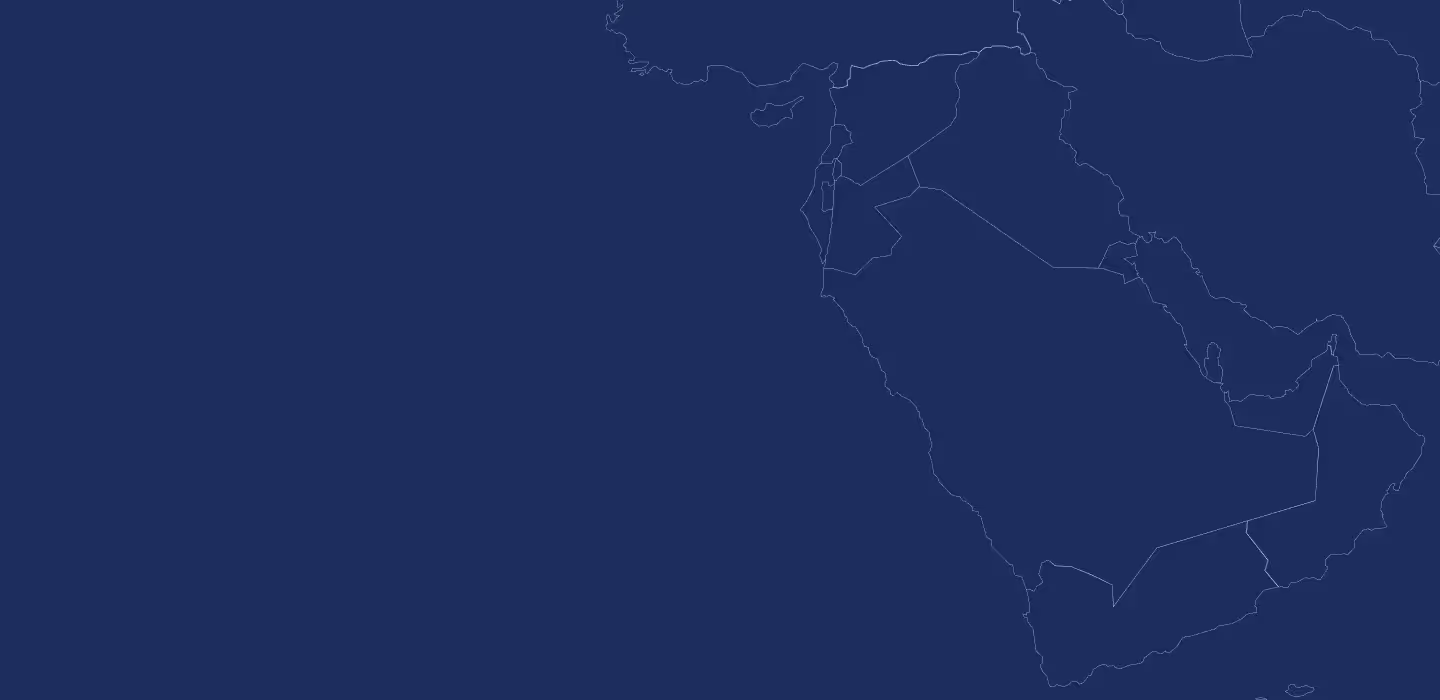
Map of the Middle Eastern region highlighting compliance regions

驾驭监管格局

本页综合概述了整个中东和非洲的药品法规。每个列出的国家都简要介绍了其监管框架,可以直接获得更深入的细节。该中心旨在阐明MEA的不同合规期望,重点介绍该地区的新兴要求和既定标准。

所有法规

Graphic element

Iraq

Iraq regulates pharmaceutical products through the Ministry of Health and the State Company for Marketing Drugs and Medical Appliances (KIMADIA). In recent years, the Iraqi government has taken steps to strengthen medicine supply chain security and combat counterfeit pharmaceutical products through the introduction of digital verification and traceability measures.

Iraq has introduced requirements for certain medicines to carry GS1 compliant DataMatrix barcodes to enable product verification and improve traceability within the supply chain. The initiative aims to support authentication of medicines distributed through government procurement channels and licensed distributors.

Implementation of serialization requirements has been phased, with priority given to medicines supplied through public healthcare programs and government distribution networks. The system is intended to improve oversight of pharmaceutical imports and distribution within Iraq.

Lebanon

Pharmaceutical products in Lebanon are regulated by the Ministry of Public Health (MOPH). Lebanon has introduced a national pharmaceutical verification and traceability initiative designed to improve supply chain transparency and combat counterfeit medicines.

The country operates a Medicine Barcode System that requires pharmaceutical products to carry GS1 compliant DataMatrix barcodes. The barcode enables verification of medicines through the Ministry of Public Health digital verification platform.

The Lebanese traceability initiative allows healthcare professionals, pharmacists, and regulators to verify medicines by scanning the barcode and confirming product authenticity through the national system. The framework supports identification of medicines throughout the distribution process and helps detect counterfeit or illegally imported products.

Serialization requirements apply primarily to human medicines registered and distributed within the Lebanese pharmaceutical market.

Qatar

Qatar does not have a publicly documented national pharmaceutical serialization and traceability system equivalent to Tatmeen, EMVS, or MDLP. The clearest published requirement identified is a GS1 based barcoding requirement tied to Hamad Medical Corporation, or HMC, tender and supply chain requirements, rather than a nationwide serial event reporting model managed by a central pharma traceability hub. (Hamad Medical Corporation)

Qatar has also established GS1 Qatar as the local GS1 member organization, which supports GTIN, GLN, and other GS1 identification standards used by companies operating in the market. (GS1 Qatar)

土耳其ITs

Türkiye operates one of the most advanced pharmaceutical track and trace systems in the world, known as the İlaç Takip Sistemi (ITS). The system is managed by the Turkish Medicines and Medical Devices Agency (TITCK) under the Ministry of Health.

The ITS platform provides full end to end traceability of pharmaceutical products from manufacturer or importer to the point of dispensing. Every medicine pack must be serialized and reported to the national system. All supply chain participants including manufacturers, importers, wholesalers, pharmacies, and hospitals must report product movements through the ITS system.

The system prevents counterfeit medicines, ensures supply chain transparency, and enables rapid product recalls and market monitoring.

埃及

Egypt has implemented a national pharmaceutical traceability framework to improve medicine supply chain transparency and combat counterfeit products. The system is managed through the Egyptian Drug Authority (EDA) under the Ministry of Health.

Egypt’s traceability framework is built around the Egyptian Drug Tracking System (EDTS), which requires pharmaceutical products to carry GS1 compliant DataMatrix barcodes with serialized identifiers. The system enables tracking of medicines from manufacturers and importers through distribution to pharmacies.

The EDTS platform supports digital verification of medicines and helps regulators monitor product movement across the pharmaceutical supply chain. Serialization and traceability requirements apply primarily to human prescription medicines, with implementation occurring in phases.

巴林

Bahrain requires pharmaceutical manufacturers, importers and distributors to serialize and track medicines through the NHRA Track and Trace System. All human medicines imported into Bahrain must carry GS1 DataMatrix barcodes and must be reported at key steps in the supply chain.

Bahrain’s model is similar to the systems used across the GCC region, aiming to improve patient safety and prevent counterfeit medicines. While less complex than Russia or Kazakhstan, Bahrain still requires accurate serialization, aggregation and event reporting for customs clearance and distribution.

未找到法规

单击 “全部清除” 可重置过滤器。

谢谢!您提交的内容已收到!
哎哟!提交表单时出了点问题。
联系我们

今天就联系我们

给我们发消息

我们很乐意听取你的意见!

Check - Elements Webflow Library - BRIX Templates

谢谢

感谢您与我们联系。我们会尽快回复您。
哎哟!提交表单时出了点问题。