亚太地区的可追溯性

Central Hub for Asia Pacific

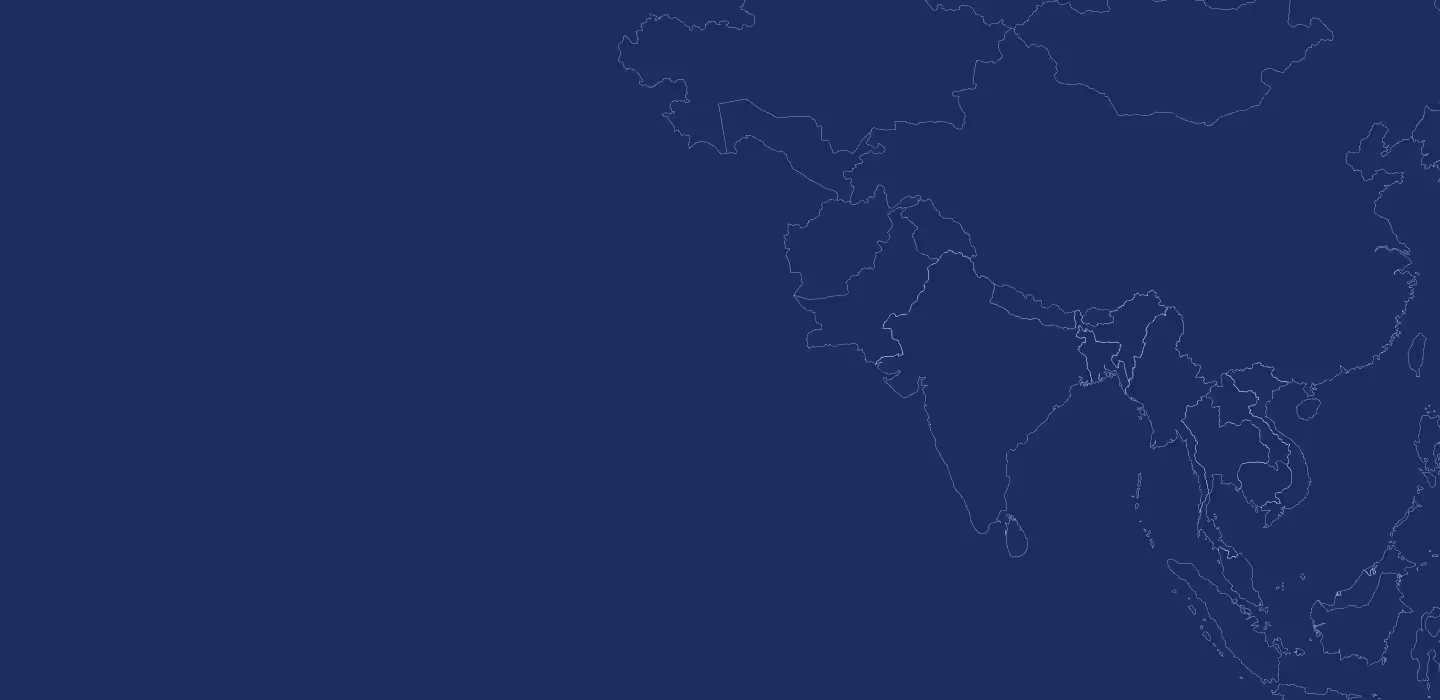
Map of Asian continent highlighting pharmaceutical compliance regions

驾驭监管格局

本页集中介绍了整个亚太地区的药品合规情况。每个国家条目都包括简短的监管概述和指向更多信息的链接。由于成熟程度和范围各不相同,此处记录了亚太地区的监管格局,以支持对该地区不断变化的药品合规计划的认识和导航。

所有法规

Graphic element

Indonesia

Indonesia is evolving toward full pharmaceutical traceability under the oversight of BPOM (National Agency of Drug and Food Control). The country currently mandates GS1 barcode identification for medicines and is building a national reporting model that requires supply chain actors to register products, submit batch information and maintain traceability records.

While Indonesia has not yet reached full real time serialization reporting like CIS or GCC countries, the system is moving in that direction. Importers and manufacturers must meet strict GS1 labeling and product registration standards to ensure market access.

Japan

Pharmaceutical traceability in Japan is regulated by the Ministry of Health, Labour and Welfare (MHLW) under the Pharmaceutical and Medical Device Act (PMD Act). The regulatory framework focuses on ensuring supply chain integrity through standardized product identification and electronic data exchange.

Japan does not currently mandate full unit level serialization and national track and trace reporting similar to systems implemented in the United States or European Union. Instead, Japan has implemented a standardized barcode identification system based on GS1 standards, which enables product identification and traceability across the pharmaceutical supply chain.

The system requires pharmaceutical manufacturers to apply GS1 DataBar or GS1-128 barcodes containing standardized product identification information on medicine packaging. These barcodes allow healthcare providers, wholesalers, and pharmacies to identify medicines and support supply chain verification.

Japan’s approach emphasizes standardized identification and distribution record keeping, supported by electronic information systems used by wholesalers and healthcare institutions.

Malaysia

Pharmaceutical products in Malaysia are regulated by the National Pharmaceutical Regulatory Agency (NPRA) under the Ministry of Health Malaysia. Malaysia has implemented a national pharmaceutical verification and traceability initiative to improve supply chain transparency and prevent counterfeit medicines.

Malaysia operates the Pharmaceutical Track and Trace System (Pharma T&T), which requires pharmaceutical products to carry GS1 compliant DataMatrix barcodes with serialized identifiers. The system enables tracking and verification of medicines throughout the pharmaceutical supply chain.

The Pharma T&T framework supports digital reporting of medicine movement from manufacturers and importers through distributors to pharmacies. The system aims to improve regulatory oversight, protect patients from falsified medicines, and strengthen the integrity of the pharmaceutical supply chain.

Implementation has been phased, with serialization requirements initially applied to selected pharmaceutical products and progressively expanded.

Pakistan

Pharmaceutical serialization and barcode requirements in Pakistan are regulated by the Drug Regulatory Authority of Pakistan (DRAP). Pakistan has established a regulatory framework requiring barcode identification on pharmaceutical packaging and is progressing toward the implementation of serialization for medicines.

The regulatory foundation is defined under S.R.O. 470(I)/2017 – Drugs Labelling and Packing Rules, which introduced mandatory barcode labeling for pharmaceutical products to support identification, tracking, and verification within the supply chain.

Pakistan is currently transitioning from basic barcode identification to GS1 DataMatrix based serialization. Regulatory updates issued by DRAP indicate that the authority is moving toward the implementation of 2D barcodes with serialized identifiers on pharmaceutical packaging.

At present, Pakistan’s framework focuses primarily on product identification through barcodes and serialization readiness, and a fully operational national end to end track and trace reporting platform has not yet been publicly implemented.

Philippines

The Philippines does not currently operate a national pharma serialization and traceability system with mandatory end to end serial number reporting across the supply chain. Based on the Food and Drug Administration’s published requirements, the current enforceable framework is centered on product identification through a Global Trade Item Number, or GTIN, or an equivalent unique global product identification number, which must be included in product registration and carried on the product exterior or in a scannable identification graphic. (Food and Drug Administration)

The Philippine FDA also maintains digital platforms for product authorization and public product verification. These support registration and market verification, but they are not published as a national serialization event repository comparable to systems such as Tatmeen, EMVS, or MDLP. (eservices.fda.gov.ph)

Sri Lanka

Sri Lanka is implementing a national pharmaceutical track and trace framework under the National Medicines Regulatory Authority (NMRA). The system is designed to improve supply chain transparency, strengthen recall management, and prevent falsified medicines from entering the legal distribution network.

The national framework requires standardized product identification and digital reporting of medicine movement across the pharmaceutical supply chain. The system is based on GS1 standards and aims to provide end to end visibility of medicines from manufacturer or importer to healthcare institutions and pharmacies.

Manufacturers, importers, distributors, and healthcare institutions are expected to adopt standardized barcoding and electronic reporting to support the national traceability system.

未找到法规

单击 “全部清除” 可重置过滤器。

谢谢!您提交的内容已收到!
哎哟!提交表单时出了点问题。
联系我们

今天就联系我们

给我们发消息

我们很乐意听取你的意见!

Check - Elements Webflow Library - BRIX Templates

谢谢

感谢您与我们联系。我们会尽快回复您。
哎哟!提交表单时出了点问题。